
Across DFW right now, screens are being installed faster than anyone is making things to play on them. New terminals, new lobbies, new showroom walls, new ballroom LED — all of it commissioned, specced and hung by capable AV integrators, and a startling amount of it running a slideshow of stock photos three weeks after handover. Dallas digital signage video production is the part of the project nobody put in the budget, and it is usually the only part the public actually sees.
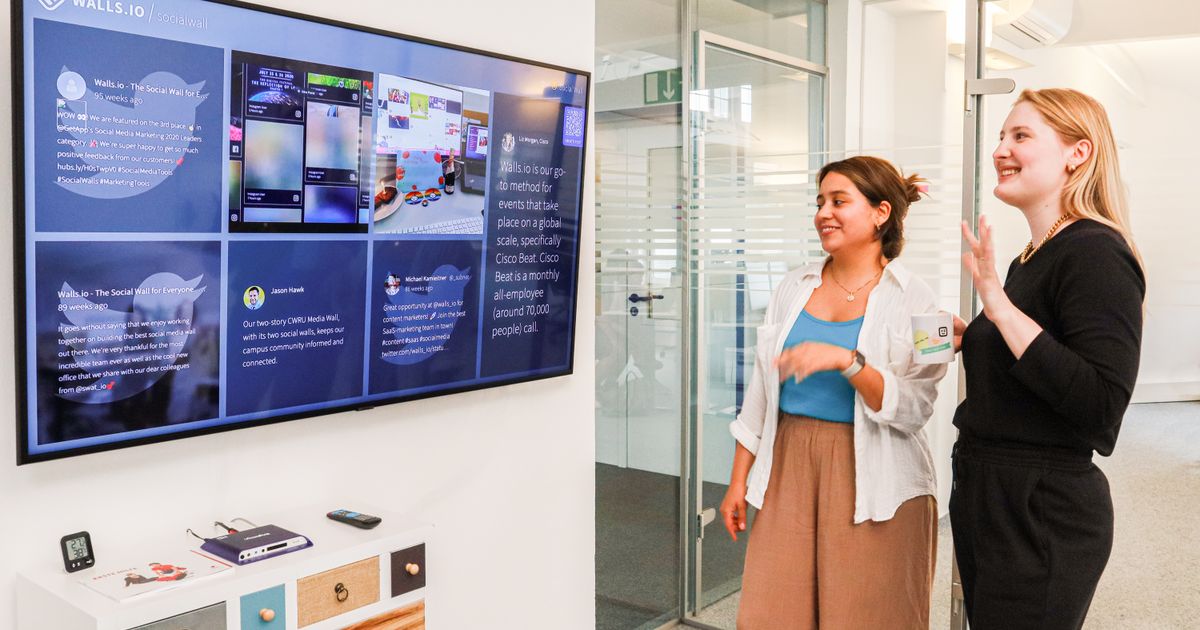
This piece is written for the people who own the hardware: AV integrators, staging and systems houses, and the in-house AV and facilities teams at DFW venues and corporate campuses. It is not a pitch for more cameras. It is a decision framework — five kinds of screen that exist in this market, and an honest verdict on which of them earn original content and which are better served by a feed, a template, or nothing at all.
Table of Contents
- The DFW build-out that created this problem
- Five kinds of Dallas screen, and what each one deserves
- Three specs that decide whether a file works on a wall
- Where the public-sector version is different
- How we work alongside DFW integrators
- Dallas digital signage video production FAQ
The DFW Build-Out Behind Dallas Digital Signage Video Production
The numbers behind the region’s screen inventory are not marketing numbers. They are capital-plan numbers.
DFW International Airport is partway through a nearly $9 billion capital program called DFW Forward, including roughly $3 billion to rebuild Terminal C — over 400 view-blocking columns removed, the roof raised, all-new concessions and lounges, plus 115,000 square feet and four gates added at Terminal C and 140,000 square feet and five gates at Terminal A, with a new 15-gate Terminal F alongside. The airport handled more than 80 million passengers in 2023 and is building toward 100 million.
Downtown, Halls D, E and F of the Kay Bailey Hutchison Convention Center are coming down while Halls A, B and C stay open throughout construction, funded so far by more than $224 million in hotel occupancy and project financing zone revenue plus a $1 billion bridge loan. The replacement is a 2.1-million-square-foot facility, and its published program includes entry and lobby areas built for activations and outdoor event terraces — which is to say, a great deal of new surface that will want moving images on it.
Fort Worth is doing the same thing on its own schedule: a $95 million first phase finished in winter 2025 and a $606 million second phase targeted for early 2030, with the center open the whole way through. Out in Grapevine and Las Colinas the inventory is already built — the Gaylord Texan alone carries 1,511 rooms and around 800,000 square feet of meeting space, and the Irving Convention Center at Las Colinas runs a 50,000-square-foot column-free hall, per Meetings Today’s market rundown.
And then there is the quietest screen market in the city. The Dallas Market Center sits on a 100-acre campus of four buildings, including a 15-floor, 3.1-million-square-foot World Trade Center and a million-square-foot Trade Mart whose Lightovation floors hold what the campus calls the largest collection of lighting manufacturers and brands in North America. Thousands of permanent showrooms, most with a display in them, all of them refreshed on a market calendar.
A video wall is a capital expense that depreciates on a five-year schedule. The content on it depreciates in about eleven weeks. Almost nobody budgets for the second number.
AVIXA’s own read on 2026 makes the same point from the hardware side: video walls are already standard in control rooms, airports and corporate lobbies, and the association expects them to spread into boardrooms, classrooms and retail. Every one of those is a content commitment disguised as an install.
Five Kinds of Dallas Screen, and What Each One Deserves
Here is the part that saves money. Not every display needs a film. Treating all five of these the same way is how a content budget gets spent on the least valuable screen in the building.
1. The headquarters lobby wall — yes, originals, once a year
A lobby wall in a Legacy, Las Colinas or Downtown headquarters is seen by recruits, customers and the board. It is the one screen where a generic loop actively costs you something, because the viewer is forming a first impression with nothing else to look at. This deserves purpose-shot material: a two-minute silent piece, cut for a specific aspect ratio, refreshed annually and versioned for visit days. Our Dallas manufacturing and industrial work ends up on these walls constantly, because a factory floor reads beautifully at scale and needs no narration at all.
2. The showroom or market display — templates, not films
A Dallas Market Center showroom changes its merchandise several times a year. Commissioning an original film for each cycle is indefensible. What works is one shoot and a template system: a rig day that produces a deep library of product and texture shots, then a repeatable edit shell the showroom’s own team can refill. Verdict: invest in the system, not the episode.
3. The concourse and wayfinding screen — no original content
Say it plainly, because it saves clients money: a gate-information or wayfinding display should not be running a brand film. Its job is legibility at eight feet by a tired traveler. Dynamic data, clean typography, and a designer — not a camera crew. The only exception is a dedicated brand or destination canvas deliberately separated from the wayfinding layer.
4. The operations and command-center display — no, and that is fine
Control-room walls in utilities, logistics and transit operations exist to show live state. The camera’s role here is not the wall at all; it is the film you make about the room for recruitment, funding or public explanation. Different deliverable, different screen, often a much better investment.
5. The event LED wall — yes, but produce it as part of the show
Rented LED in a ballroom at the Anatole, the Irving Convention Center or Halls A through C is the one case where content and hardware have to be designed together, because the canvas is a one-off pixel map that exists for two days. Walk-in loops, speaker lower-thirds, sponsor beds, transition plates and the post-event recap all come off the same production. This overlaps heavily with how we already partner on Dallas AV and staging projects, and it is the fastest of the five to get wrong, because there is no second show day.
Three Specs That Decide Whether a File Works on a Wall
Most content that fails on installed AV fails for one of three reasons, and all three are decided before anyone rolls a camera. Good Dallas digital signage video production starts by getting these three answers out of the integrator in writing.
- The real pixel map, not the nominal aspect ratio. A 3-by-3 tile array with 8mm pitch and a bezel-free seam is not “16:9.” Ask for the exact canvas dimensions, the pitch, the seam positions and whether any tiles are masked by architecture. Composition gets built around where the seams fall, and faces do not go on a seam.
- Silent by default. Almost every installed screen runs muted. That means no voiceover carrying the argument, no interview that only works with audio, and type doing the work instead. It is a genuinely different craft from a film made for a page, and it is the single most common reason a repurposed commercial dies on a wall.
- Actual dwell time. A lobby visitor waiting for a badge has ninety seconds. A concourse passer-by has four. A showroom buyer might stand there for six minutes. Cut length follows dwell time, and dwell time is a fact the facilities team already knows and is rarely asked for.
Get those three and a single shoot day can supply a lobby wall, a showroom loop and a set of vertical cutdowns, because the shot list was built for multiple canvases from the start rather than cropped down afterwards.
Where the Public-Sector Version Is Different
DFW has a lot of publicly owned screens — transit platforms, city lobbies, county service counters, school district entrances, recruiting displays at community events. Two things change.
First, the physical context is unstable in ways the private sector’s is not. DART closed Convention Center Station on January 5, 2026 for roughly three years of construction, directing riders to Cedars Station and EBJ Union Station instead. Content that names a station, a route or an entrance goes stale the moment a project like that starts, so public-sector signage should be built in modular segments you can replace one at a time.
Second, accessibility. On-premises signage and the web are not governed by the same rule, and it is worth not overstating that. What matters practically is that the same file almost always ends up on the agency’s website or social channels, where the Department of Justice’s Title II rule does apply — WCAG 2.1 Level AA, with compliance dates extended in an April 2026 interim final rule to April 26, 2027 for larger entities and April 26, 2028 for smaller ones and special districts. Since signage plays muted anyway, burning open captions in from the start costs nothing and makes the file compliant wherever it lands later. That is a summary of a published rule, not legal advice, and your counsel should confirm how it applies to your entity.
We do a lot of this work. Our government video production practice covers police and fire departments, 9-1-1 districts, parish government and school districts, and installed-screen content is increasingly part of those briefs rather than a separate conversation.
How Dallas Digital Signage Video Production Works Alongside DFW Integrators
We do not sell, install or commission displays, and we are not trying to. The relationship that works looks like this: the integrator owns the system, the warranty and the client relationship; we get pulled in at design stage to ask about pixel map, dwell time and mute, and we deliver files that drop into the CMS the integrator already chose. On projects where the integrator prefers to stay front-of-house, we work under their brand and never contact the end client directly.
Here is our 2026 reel, which is a fair sample of the kind of material that holds up at architectural scale with the sound off:
More of the work lives in our portfolio. We cover Downtown Dallas, Uptown, the Design District, Las Colinas and Irving, Legacy and North Dallas, Addison and the wider DFW metroplex, which in practice means we can scout three venues in a morning.
The same discipline applies when the screens belong to a public agency: we set out what that looks like in our guide to 9-1-1 telecommunicator recruitment film across DFW.
Dallas Digital Signage Video Production: FAQ
Who owns the finished content when an integrator subcontracts the production?
Whatever the contract says, and it should say it explicitly. Our default on subcontracted work is that the integrator’s client owns the delivered files and we retain no publication right without written permission. Get this settled before the shoot, because a lobby film that cannot be reused on the client’s own website is a wasted asset.
Can one film serve a lobby wall and a social feed?
One shoot can; one file cannot. The lobby cut is silent, slow and built around the seams. The social cut is vertical, captioned and front-loaded in the first two seconds. Plan both into the same shoot day and the second one costs very little. Crop the first into the second afterwards and both look wrong.
How often does installed content actually need replacing?
For a headquarters lobby, once a year plus a version for major visit days. For a showroom on a market calendar, each cycle — which is exactly why templates beat films there. For an event wall, it is disposable by design. The failure mode we see most often is a wall still running its handover content two years later.
Will you produce content for a system you had no part in designing?
Yes, and most of this work is that. We ask the integrator or facilities team for the canvas dimensions, pitch, CMS and playback constraints, and if nobody has those we go and measure. It adds a step but it beats delivering a file that letterboxes itself on the wall.
How is this different from producing a commercial or brand film?
A commercial assumes an audience that chose to watch, with sound, once. Installed content assumes an audience that did not choose, cannot hear it, and will see it repeatedly. That changes pacing, type, length and how much you are allowed to repeat. It is closer to designing a window display than cutting an ad.
Bring Us In at Design Stage, Not at Handover
The cheapest moment to solve a content problem is while the pixel map is still a drawing. If you are an integrator with a DFW install landing in the next two quarters, or a facilities team staring at a new wall with nothing to put on it, the team at this Dallas video production company is glad to join the design call and tell you honestly which of your screens deserve original content.
If a screen is worth hanging, it is worth having something real to play. Talk to us as a video production company in Dallas that plans content and canvas together, or just get in touch and tell us what is going in.
About the author
Andrei Tone is the founder and director of Tone Films, a video production company with studios in 45 U.S. cities. He has directed films for police and fire departments, 9-1-1 districts, school districts, hospitals and brands including Disney Junior and Cuisine Solutions.


