
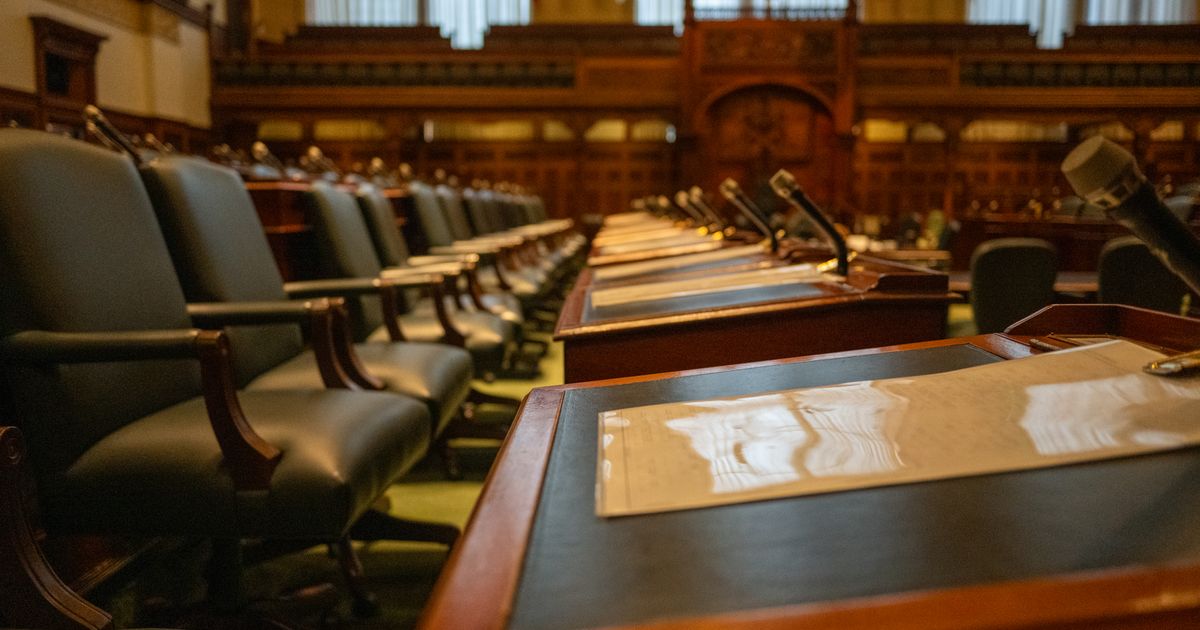
A communications director at a City of Austin department can have the budget approved, a date on the calendar and a clear idea of the film she needs — and still lose six weeks. Not to casting, not to weather, not to the edit. To the purchase order.
That is the part nobody writes about. Austin government video production is not mainly a creative problem. It is a procurement problem wearing a creative problem’s clothes. Finding a crew that can shoot a council chamber is easy. Choosing the right buying path, and writing a scope of work that leaves you with files you can still use in four years, is where public-sector projects actually stall.
Austin makes that harder than most cities, and the reason is geography. Inside about two miles of Congress Avenue sit four buyers with four different rulebooks: a home-rule city with published quote thresholds, a county running solicitations through BidNet, a federally funded transit authority buying under Federal Transit Administration rules, and the State of Texas itself. Austin government video production has to work inside all four. This guide is for the people who navigate them — public information officers, communications managers, department heads and the purchasing staff who review what they send over.
What’s in this guide
- Why the buying path decides the project
- What most vendors get wrong about Texas law
- Path 1: Quotes and informal solicitations
- Path 2: The formal advertised solicitation
- Path 3: Cooperative contracts
- Path 4: Federally funded work, and why CapMetro is different
- The scope of work that decides everything
- In-house team or outside crew
- Where this work happens across Austin
- Frequently asked questions
Why the buying path decides the project in Austin government video production
Start with the number that governs everything. Under Texas Local Government Code Section 252.021, a municipality expecting to spend more than $50,000 from one or more municipal funds must run competitive sealed bidding or competitive sealed proposals, use a reverse auction, or follow the construction procedures in Government Code Chapter 2269.
Below that line, the city sets its own steps, and Austin publishes them plainly. The Doing Business with the City page lays out four bands: $0 to $3,000 on a single quote; $3,000.01 to $5,000 on an informal request with a minimum of three quotes; $5,000.01 up to the competitive threshold through an informal solicitation; and anything above that threshold through a formal advertised solicitation.
Read those bands against a realistic budget and the year takes shape. One departmental film, captioned and delivered properly, usually lands in the third band. A year-long programme across several departments lands in the fourth. The same brief, bought two ways, has two completely different calendars — which is why the first question in any Austin government video production conversation is about dollars and dates, not cameras.
What most vendors get wrong about Austin government video production
Here is the misconception that costs agencies time. Vendors regularly tell public-sector buyers that video is a “professional service” and can therefore be selected on qualifications without competitive bidding. In Texas, that is not what the statute says.
The Professional Services Procurement Act defines the term narrowly. Section 2254.002 of the Government Code lists the practices it covers:
“accounting; architecture; landscape architecture; land surveying; medicine; optometry; professional engineering; real estate appraising; professional nursing; or forensic science” — Tex. Gov’t Code § 2254.002
Video production is not on that list. Neither is communications, photography or creative services. Austin government video production is therefore an ordinary purchase of services, subject to the ordinary competitive requirements, and a vendor who says otherwise is either mistaken or hoping you will not check. Confirm the treatment with your purchasing office and counsel — entities apply their rules differently — but do not let a vendor’s convenience set your procurement strategy.
Path 1: Quotes and informal solicitations, where most Austin government video production is bought
This is the fastest honest route and how most single films get purchased. A department needs one piece — a service-change explainer, a training module, a recruitment film, a bilingual public health message — and the cost sits under the competitive threshold.
The work here is on your side, not the vendor’s: writing a request specific enough that the three quotes come back comparable. Two crews quoting “a two-minute video” will differ by a factor of three, because one assumed a single shoot day and auto-captions while the other assumed three locations, a Spanish version and audio description.
Comparable quotes need the same four things named in the request:
- Shoot days and locations, counted, not implied.
- Accessibility deliverables — captions, transcript, audio description — priced as line items rather than folded into a lump sum.
- Language versions, specified as separate voice or on-camera versions rather than burned-in subtitles.
- Who holds the masters, and in what format they are delivered.
Get those four into the request and the informal path stops being a guessing game. It is the highest-leverage twenty minutes anyone spends on Austin government video production all year.
Path 2: The formal advertised solicitation
Above the competitive threshold you are in a formal process, and it is often worth running one even when you could avoid it. A well-run solicitation for a multi-year Austin government video production programme produces a better scope, protects the agency and locks pricing for the contract term.
Two Austin-specific notes. Attach the right commodity codes to your vendor profile, because the City notifies only the vendors whose codes match. And the City’s Small Business Procurement Program applies preference points on requests for proposals and bid discounts on invitations for bids, scaled to contract size and interacting with any MBE/WBE goals assigned. If your department wants a wider field of respondents on Austin government video production work, that programme is a lever you already have.
The formal path is slower by design. Build the review cycle into the Austin government video production schedule at the start and it stops being the thing that kills the deadline.
Path 3: Cooperative contracts
The route most communications teams have never been walked through is the cooperative purchase, and it is the one that most often rescues an Austin government video production deadline. Texas local governments may buy through cooperative purchasing programmes, and the statute is unusually direct about the effect. Local Government Code Section 271.102(c) provides that a local government purchasing goods or services under that subchapter “satisfies any state law requiring the local government to seek competitive bids for the purchase of the goods or services.”
In practice, a department with an urgent need and approved budget may have a legitimate path that avoids a fresh solicitation, if a suitable cooperative contract exists and the purchase genuinely fits its scope. It is not a loophole and not automatic — your purchasing office decides whether a contract covers what you are buying. Ask before assuming a six-week runway, particularly for Austin government video production tied to a fixed public date.
Path 4: Federally funded work, and why CapMetro is different
CapMetro does not buy Austin government video production the way the City does. It runs solicitations through PlanetBids and takes vendor questions through its procurement department directly, and as a federally funded transit authority it carries Disadvantaged Business Enterprise obligations that shape who can respond and how teams are assembled.
That matters right now. As KUT reported in July 2026, Project Connect’s light-rail line received environmental clearance in January 2026, a contractor has been selected, construction is set to begin in 2027, and the first trains are targeted for 2033 on a 9.8-mile alignment with 15 stations at an estimated cost above $8.2 billion. For fiscal 2026, the Project Connect property tax was expected to bring in $185.8 million.
Read that as a communications forecast, not a transit story. A build that long means years of detours, closures, stop relocations and service changes that must be explained to riders who will not open a PDF. Agencies treating this as a standing capability rather than an annual purchase will get through it far more calmly than agencies commissioning explainers one panic at a time.
The scope of work that decides everything in Austin government video production
Whichever path you take, the scope of work is where an Austin government video production project is won or lost. Four items belong in every one.
Accessibility, specified rather than assumed. The Department of Justice extended the ADA Title II web accessibility compliance dates by one year in April 2026. Public entities serving populations of 50,000 or more now have until April 26, 2027, and smaller entities and special district governments until April 26, 2028, with WCAG 2.1 Level AA as the standard. Write captions and audio description into the deliverables list, not the options list.
Language versions, planned at script stage. Translating a locked edit always costs more than scripting for two languages from the start, and burned-in subtitles are not a Spanish version.
Masters and retention. Agencies change vendors. Say in the contract who holds the camera masters, in what format, and how they are handed over. Public meeting recordings also sit inside the state’s local government retention schedules, so your records management officer should see the delivery spec before it is finalised.
Distribution formats. Austin has an advantage most cities do not: ATXN, the City’s government access channel, carries council meetings, news conferences and departmental programming on Channel 6 for Spectrum and Astound subscribers, streams at atxn.tv, and runs apps on Roku, Apple TV, Amazon Fire and Google Play. A film that must play on cable, in an app, on a website and in a social feed needs those exports named in the contract.
Here is a community and economic development film we produced for St. Mary Parish, Louisiana — a parish government commissioning a piece that had to work for residents, employers and site selectors at once. It is a fair reference for what a well-defined public-sector scope produces:
That range is why we built a national government video production company hub with procurement information on it, rather than treating public agencies as a variety of corporate client. You can see more of the work in our portfolio.
In-house team or outside crew: an honest comparison
Plenty of Austin agencies have real in-house capability, and this is not either/or — it is a question of which jobs each is built for.
An in-house team wins on speed, institutional knowledge and cost per piece for routine work — the weekly update, the short social clip, the straightforward interview. Nobody outside the building understands your departments as fast as the person who sits in the meetings.
An outside crew earns its cost in three situations: when the shoot is live, multi-camera and cannot be repeated; when the deliverable has to clear a compliance bar the in-house workflow was never built for; and when volume spikes past what one or two staff can carry. Most budgets should fund a hybrid — in-house for cadence, contracted for the pieces where a bad shoot day cannot be redone.
The failure mode to avoid is the reverse: one expensive flagship film a year and nothing in between. Effective Austin government video production is a drumbeat, not an event.
Where Austin government video production happens across the city
Most Austin government video production happens within a short drive of our studio at 555 E 5th St. downtown, a few minutes from City Hall, the Travis County complex and the Capitol grounds — useful when a shoot has to fit between a committee meeting and a press conference. We work across Downtown Austin, East Austin, South Congress, Rainey Street, The Domain and Zilker and Barton Hills, and out to agency facilities well beyond the core.
The capability underneath all of it is the same one behind our Austin conference coverage and our recruitment films for Austin employers: multi-day, multi-camera live coverage with fast turnaround and enough compliance literacy to keep a public agency out of trouble. If you are evaluating an Austin video production company for public-sector work, that combination is what to test for.
Public health agencies buy inside these same rules, and Austin’s clinical construction pipeline is about to make that a much bigger line item: if your remit touches Central Health’s new psychiatric beds and crisis centre, or a partner hospital campus, read what Austin’s hospital building boom changes about a healthcare shoot before you write the scope of work.
City and county departments are not the only buyers inside those two miles, and the state’s rulebook is tighter than either of theirs: before you plan a shoot on Capitol Complex property, read the rules the Capitol Complex sets for state agency filming.
Frequently asked questions
Does Austin government video production require a formal RFP?
Not always. Under Texas Local Government Code Section 252.021 the competitive requirement is triggered above $50,000, and the City of Austin publishes bands below that: a single quote up to $3,000, three quotes from $3,000.01 to $5,000, and an informal solicitation up to the competitive threshold. Many single departmental films sit in the informal band. Confirm current thresholds and your entity’s own rules with your purchasing office.
Is video production a “professional service” under Texas law?
No. Section 2254.002 of the Texas Government Code lists the covered practices — accounting, architecture, landscape architecture, land surveying, medicine, optometry, professional engineering, real estate appraising, professional nursing and forensic science — and video production is not among them. It is generally treated as an ordinary services purchase rather than a qualifications-based selection. Your counsel should confirm how that applies to your entity.
Can we buy Austin government video production through a cooperative contract?
Sometimes, and it is worth asking early. Local Government Code Section 271.102(c) provides that a local government purchasing under that subchapter satisfies state law requiring competitive bids. Whether a specific cooperative contract covers video production for your purchase is a decision for your purchasing office, not for the vendor.
Do our videos need captions and audio description?
Public entities are working toward WCAG 2.1 Level AA under the ADA Title II web accessibility rule, with compliance dates of April 26, 2027 for entities serving populations of 50,000 or more and April 26, 2028 for smaller entities and special district governments. That means captions for prerecorded and live audio, and audio description for prerecorded video. Put both in the Austin government video production deliverables list at scope stage — retrofitting an archive costs far more.
How far ahead should an Austin agency book a crew?
For a single film on the informal path, four to six weeks from approved scope to shoot day is comfortable. For a formal advertised solicitation, plan a full quarter: review cycles and council or commissioners court calendars — not production — set the pace on Austin government video production.
Talk to us about your next project
If you have approved budget and an unclear purchasing path, that is solvable in a short conversation. We will tell you which band a given Austin government video production scope is likely to fall into, what accessibility deliverables cost as line items, and how long Austin government video production actually takes on your calendar rather than ours.
Tone Films is a video production company in Austin with real public-sector experience — police and fire departments, a 9-1-1 district, a parish government and public school districts — and a downtown studio minutes from most of the buildings this work happens in. Get in touch and tell us the deadline, the audience and the budget band.
Public agencies are not the only Austin buyers working under disclosure limits. The region’s advanced-manufacturing employers face a stricter version of the same problem, which we unpack in our guide to filming a plant whose process is the secret.
About the author
Andrei Tone is the founder and director of Tone Films, a video production company with studios in 45 U.S. cities. He has directed films for police and fire departments, 9-1-1 districts, school districts, hospitals and brands including Disney Junior and Cuisine Solutions.


