
Dallas is holding its 2026 corporate event season without the use of its convention center. Halls D, E and F at the Kay Bailey Hutchison Convention Center have already been demolished, Halls A, B and C spent 2026 serving as the International Broadcast Center for the FIFA World Cup, and the replacement building is not due until the end of the decade. That single fact is why Dallas hybrid event video production stopped being a nice-to-have line item in this market and became a capacity decision.
When the biggest room in a city goes away for four years, events do not shrink politely. They scatter into hotel ballrooms, into Las Colinas, into Addison and Frisco, into rooms that hold 400 people when the invitation list runs to 900. The audience that does not fit has to be served somewhere, and the only place left is a screen.
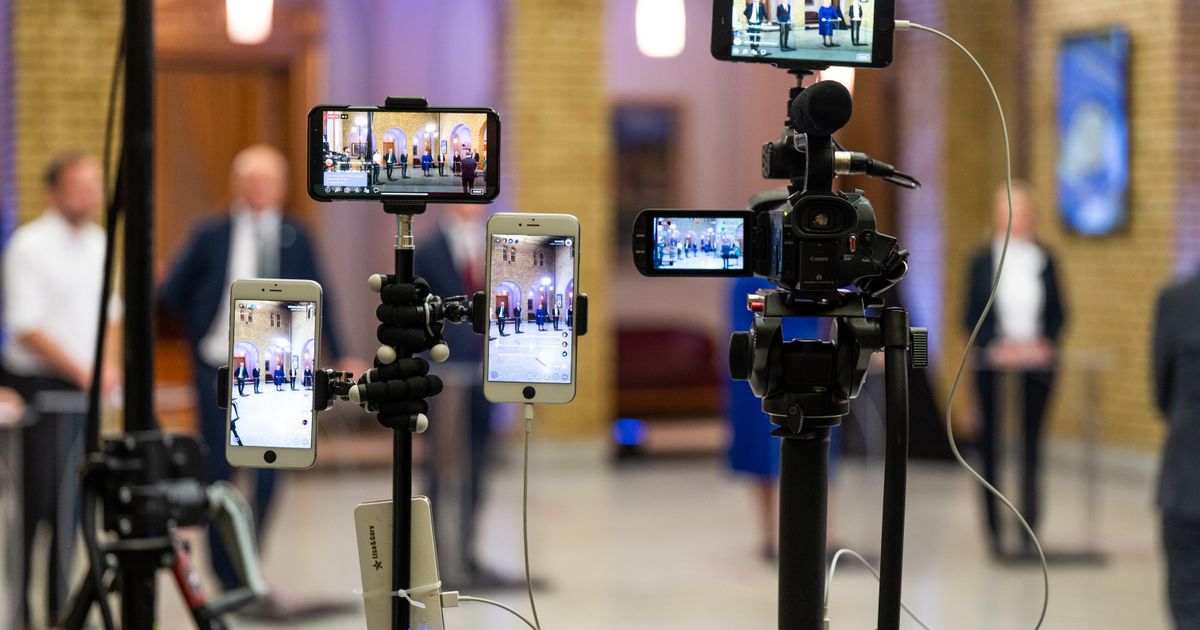
Table of contents
- The venue math behind every DFW hybrid event in 2026
- The nine-point checklist we run before show day
- What not to stream, and why the research backs you up
- What hybrid delivery actually costs
- Dallas hybrid event video production FAQ
Dallas hybrid event video production starts with venue math
The numbers on the convention center rebuild are public and worth knowing before you plan anything. FOX 4 reported in March 2026 that the city had begun separating the convention center from the Omni Dallas Hotel, that Halls D, E and F were already demolished, and that the phase under way is part of a project costing $3.5 billion, with completion expected in the fourth quarter of 2029.
The City of Dallas project page puts the debut in 2030 and describes the outgoing facility at 761,170 square feet of event space, including 529,250 square feet of exhibit space, two ballrooms and 64 meeting rooms. In June 2026 the city council rejected a redesign that would have raised the building’s height and told staff to advance the current design without further delay, which pushed the expected completion date to 2030 in CBS Texas’s reporting. Visit Dallas president Craig Davis, quoted in the same piece, was blunt about the interim cost.
“Since the convention center closed, Dallas has lost $92 million in convention lodging and $13 million in taxes.”
Read past the civic argument and there is a production brief hiding in it. Between now and 2029 or 2030, a Dallas corporate or association event that would once have taken one big hall is instead doing one of three things: capping attendance, splitting across two venues, or serving part of its audience remotely. The first costs you reach. The second doubles your logistics. The third is a video problem, and it is the one most organizations try to solve two weeks out with a laptop and a webcam.
That is the job. Not a camera at the back of the room, but a deliberate plan for the people who were never going to get into it. The capability underneath it is the same one we bring to Dallas conference video production and to AV and staging partners across DFW: multi-camera coverage, a clean audio path, and fast turnaround from a room you do not control.
The nine-point Dallas hybrid event video production checklist
This is the actual pre-production list, in the order it has to happen. Points one through four are settled before contracts are signed. Points five through nine are settled in the week before the event.
1. Lock the audio split before you lock the venue
Far more event recordings are ruined by audio than by picture, and it is the one failure an edit cannot repair. The question to ask the venue and the staging company, in writing, is who owns the mix and whether you can take a discrete feed off the console rather than a summed stereo pair. In hotel ballrooms around Dallas the answer depends entirely on whether the house system is being used or an outside staging vendor has brought their own. Ask before the room is booked, because a venue that will not give you a feed changes your equipment list and your price.
2. Bring your own internet, and assume the venue’s will fail
Convention-grade bandwidth was one of the quiet things the Kay Bailey Hutchison Convention Center did well. Ballrooms and smaller conference centers are inconsistent, and the guest Wi-Fi your attendees are hammering is never the network your stream should sit on. We budget a hardwired circuit where one exists, plus bonded cellular as a parallel path, and test both the day before.
3. Decide the stream’s single job
A stream can do one of three things well and all three badly. It can extend reach to people who could not travel. It can create a record for people who will watch later. It can gate content behind registration for a revenue or lead-generation reason. Those are three different productions with three different budgets. Write the one you are buying on the first page of the brief, and the rest of the decisions get easier.
4. Build the run of show against two clocks
The room runs on hospitality time: coffee arrives, the previous session overruns, the CEO takes an extra eight minutes. The stream runs on published time, because somebody in Phoenix blocked 10:00 to 11:30 Central and will leave at 11:30 regardless. Build the schedule with hard stream in and out points, a holding slide with a countdown, and a named person empowered to cut away. Without that, the remote audience watches an empty lectern for twelve minutes and does not come back next year.
5. Light for the camera, not the room
The displacement of large Dallas events into smaller rooms has one quiet benefit and one quiet cost. The benefit is that cameras sit closer to the stage, so you need less glass and get better faces. The cost is that ballroom uplighting and pin spots designed for a seated audience read as murky on a 6-inch phone screen. A keylight on the lectern and a practical wash on the front two rows is usually the whole fix, and it needs to be agreed with the staging team rather than discovered at rehearsal.
6. Caption from the start, not in post
Live captions widen the audience, raise completion rates on muted phones, and are far cheaper to commission with the stream than to retrofit afterwards. They are also a requirement in some rooms rather than a courtesy: WCAG 2.1 lists captions for live synchronized media as a Level AA success criterion. If a city department, a transit agency, a school district or a hospital system is a partner, co-host or funder of your event, treat accessible captioning as scoped work from day one. We go into the procurement side of this in more detail on our government video production hub.
7. Record isolated feeds, not just the program mix
The live switch is a one-time decision made under pressure. The edit is a second chance, and it only exists if every camera and the presentation feed were recorded separately. Isolated recordings cost storage and almost nothing else, and they are the difference between a usable set of session cuts and a program mix that cut to the wrong camera on the best line of the day.
8. Give the remote audience a human host
Chat moderation is a role, not a browser tab somebody watches between tasks. Someone should welcome the remote room, say what is coming next, carry two or three questions to the stage and tell people where the recording will live. In our experience this is the cheapest line on the budget and it matters more to remote attendees than a second camera.
9. Agree the publish map before show day
Decide, in advance and in writing, which sessions are public, which are internal only, which need legal or compliance review, and who the single named approver is. Then decide what happens to sponsor logos, licensed music in walk-in playlists, and third-party charts in decks. A publish map agreed on the Tuesday costs nothing. Discovered in the edit, it costs two weeks of a content calendar.
Here is a Dallas brand event we covered for Patrón and Grey Goose at Chefs for Farmers, the kind of multi-camera coverage that feeds both a live audience and everything published afterwards:
More of that work, corporate and public sector alike, sits in our portfolio.
What not to stream, and why the research backs you up
The instinct once you have a stream is to put everything through it. The research argues against that, and it is worth knowing before a sponsor asks why the keynote is not public.
Freeman, the event services company headquartered here in Dallas, published research in May 2026 based on nearly 20,000 responses from people in the target audience for industry events who had not attended them. The finding that matters here: 60% of non-attendees said they would be more likely to attend if events offered education only available in person. An earlier Freeman report, surveying more than 4,700 attendees, found that 70% of attendees rank in-person events as their top source of professional learning, ahead of webinars and on-demand platforms.
So the honest version of hybrid is asymmetric. Stream the things that persuade people to come next time: the opening session, the headline keynote, the awards moment, the parts that look and sound like an event worth travelling for. Keep in the room the things people can only get by being there: hands-on workshops, roundtables, the clinic where somebody asks a real question about their own numbers. A stream that reproduces the entire agenda tells your 2027 audience they never have to leave their desk.
There is a scheduling consequence too. Freeman’s October 2026 research, from a September survey of more than 3,400 attendees and exhibitors, found that 54% of attendees start planning what they will do onsite three or more weeks out, sometimes while still deciding whether to attend, and that only 18% approve their own funding. Your final headcount is not knowable early, and a large share of your audience is waiting on somebody else’s budget approval. A stream and a recording are how you serve the people whose travel request came back as a no.
What Dallas hybrid event video production actually costs
Hybrid budgets go wrong in a predictable way. The event is priced as a filming day, then streaming is added as a line item late, and the parts that make it work, redundant connectivity, a captioner, a chat host, isolated recordings, get cut because they look like extras.
They are not extras. They are the difference between a stream and a liability. A more useful way to think about the number: price the in-room capture and the remote delivery as two deliverables with two owners, then ask what each one is worth against the cost of the seat you could not sell. In a market where the biggest hall is a construction site until the end of the decade, the remote audience is not an overflow channel. For many DFW events through 2029 it is most of the audience.
One more thing worth saying plainly. Dallas hybrid event video production is decided by the room, the audio path and the network, in that order. No amount of post-production rescues a stream that went out over guest Wi-Fi from a ballroom where nobody owned the mix. Get the first four points of the checklist right and the rest is craft.
Dallas hybrid event video production FAQ
How many cameras does a hybrid event need?
Three is the workhorse configuration for a general session: a locked wide for the full record, a long lens on the speaker, and a roaming camera for audience and cutaways. Two can work in a smaller ballroom with a shallow stage. One camera is only honest if everyone accepts there is no cutaway and no safety net if something goes wrong on the day.
Can you stream from any DFW venue, or do some rule it out?
Almost any venue can be streamed from, but the cost changes. The two variables are whether you can get a hardwired circuit and whether you can take a clean audio feed off the console. Hotel ballrooms and purpose-built conference centers around Irving, Las Colinas, Addison and Frisco usually support both. Restaurants, galleries and loft spaces in the Design District often support neither, and we plan bonded cellular and our own audio capture accordingly.
Should the recording be public or gated?
That depends on the single job you assigned the stream. If the goal is reach and reputation, publish the headline sessions openly and keep them short. If the goal is lead generation, gate the full-length sessions behind a form and publish clips openly to drive people to it. Gating everything suppresses the reach that makes next year’s event easier to sell.
How fast can we have the edited sessions back?
A same-day highlight clip is realistic when it is planned into the shoot. Full session cuts with the presentation feed laid in typically land within a week, and anything needing legal or compliance review follows that review rather than the edit. The approval step, not the editing, is usually what sets the date.
Do we need live captions if the event is internal?
Practically, yes. Captions raise completion rates on laptops and phones in open-plan offices, they make the recording searchable, and they cost far less commissioned alongside the stream than retrofitted afterwards. If any part of the event reaches the public or involves a public-sector partner, accessibility stops being a preference.
Tell us the room and the date
If you have an event landing in the next two quarters and the venue is still being decided, that is the right moment for this conversation. Tell us the room, the date, the headcount you expect in person and the headcount you cannot seat, and we will come back with a capture and delivery plan and an honest list of what it produces. As a Dallas video production company headquartered in this market, we work across Downtown Dallas, Uptown, the Design District, Las Colinas and Irving, Legacy and North Dallas, Addison and the wider metroplex.
Planning an internal all-hands rather than an external event? The brief is different, and we set it out in our guide to filming a company meeting with two audiences. For everything else, our team as a video production company in Dallas covers interviews, live streaming, event coverage and promotional films. Send us your dates and we will tell you what is genuinely deliverable.
About the author — Andrei Tone is the founder and director of Tone Films, a video production company with studios in 45 U.S. cities. He has directed films for police and fire departments, 9-1-1 districts, school districts, hospitals and brands including Disney Junior and Cuisine Solutions.


